If you look at the warranty on a bundle of shingles, you might see the number “30” or “Lifetime.” But ask any veteran roofer in the Windy City, and they will tell you the truth: Chicago plays by its own rules.
Our climate is a durability nightmare. We experience scorching summers with high UV radiation, followed immediately by freezing winters with heavy snow loads. This constant expansion and contraction puts immense stress on roof materials.
So, how long can you actually expect your roof to protect your home? Here is the realistic breakdown of roof lifespan in Chicago and how to know when your time is up.
The Reality of Asphalt Shingle Durability
Asphalt shingles are the most popular choice in the Midwest, but not all shingles are created equal.
-
3-Tab Shingles (The Economy Option): These flat, single-layer shingles are often found on older homes or budget builds. While they are cheap, they struggle against high winds.
-
Architectural Shingles (The Chicago Standard): These are thicker, multi-layered, and textured. Asphalt shingle durability jumps significantly here because they are heavier and hold granules better.
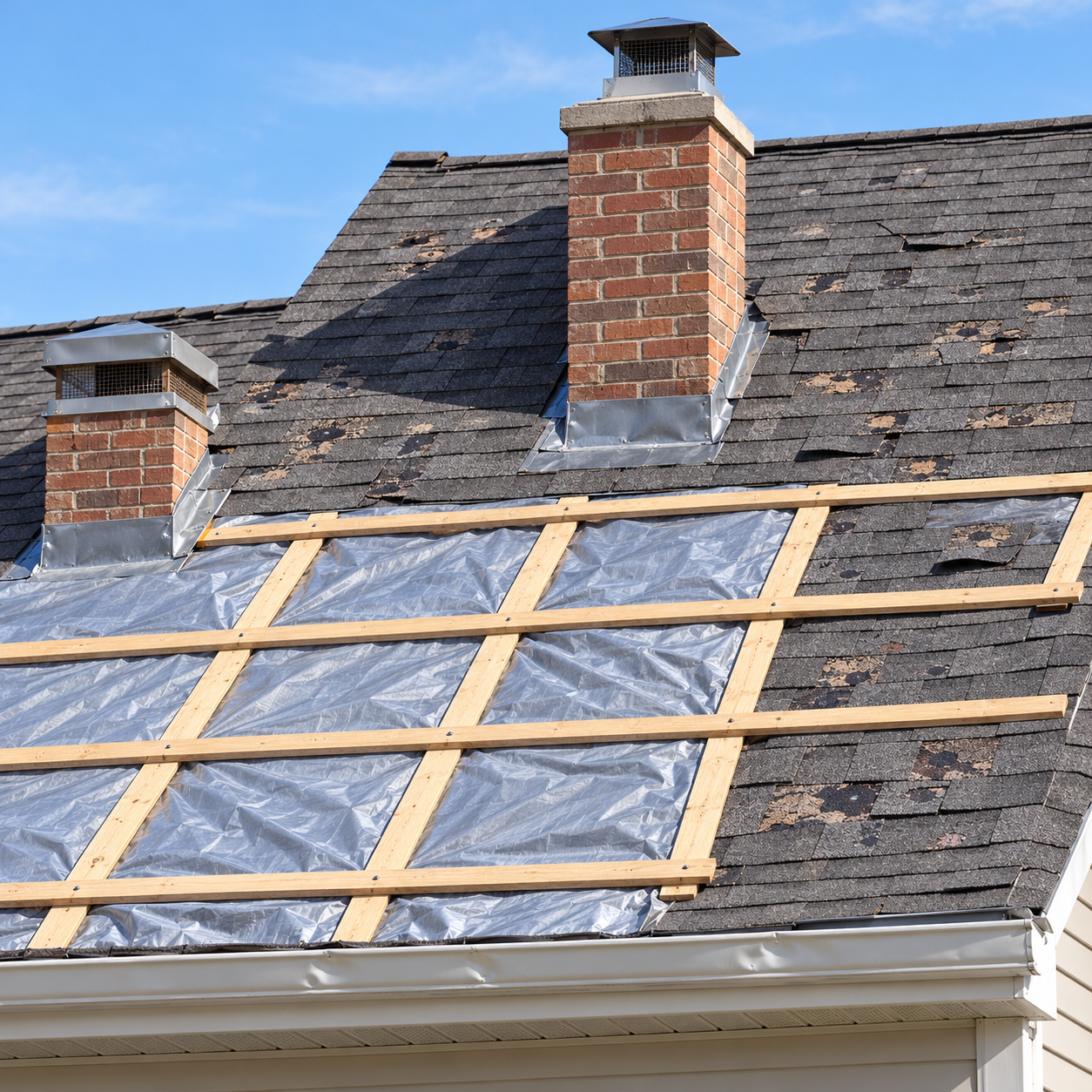
Note: If your architectural roof is approaching the 22-year mark, you are in the “danger zone” where sealants begin to fail.
Flat Roofs (Commercial & Residential)
Chicago is famous for its flat-roofed bungalows and two-flats. These require specialized membranes like Modified Bitumen or TPO.
-
Expected Lifespan: 15 to 25 years, heavily dependent on maintenance. Unlike shingles, flat roofs don’t shed water naturally. If drains clog, the lifespan drops dramatically.
Metal and Cedar: The Long-Haul Options
If you are looking to do it once and never again:
Factors That Shorten Lifespan
Why do some roofs fail in 15 years while neighbors last 25? It usually comes down to two factors:
-
Ventilation: If your attic is poorly ventilated, heat gets trapped in the summer. This literally cooks the shingles from the bottom up, causing them to crack and curl prematurely.
-
The Freeze-Thaw Cycle: Water seeps into tiny micro-cracks in the roofing material. When it freezes, it expands. Over 20 winters, this breaks down even the toughest materials.
Roof Replacement Timing: Don’t Wait for the Leak
Homeowners often ask, “Can’t I just wait until I see a stain on the ceiling?”
We strongly advise against this. By the time water enters your living space, the decking (plywood) and insulation are likely soaked. Roof replacement timing is about economics: replacing a roof before it fails is cheaper than replacing a roof and fixing water damage.
You are due for an assessment if:
-
Your roof is over 20 years old.
-
You find granules in your gutters (the roof’s sunscreen is wearing off).
-
Shingles are curling or buckling.
Conclusion: Protect Your Investment
Knowing your roof’s age and material is the first step in home maintenance. If you are approaching that 20-year mark, don’t guess.
Schedule a Free Inspection Now to get an honest assessment of your roof’s remaining life. Need to budget for the future? Get a Free Quote Today. If it’s time for a new roof, Claim $500 Off Your Project.