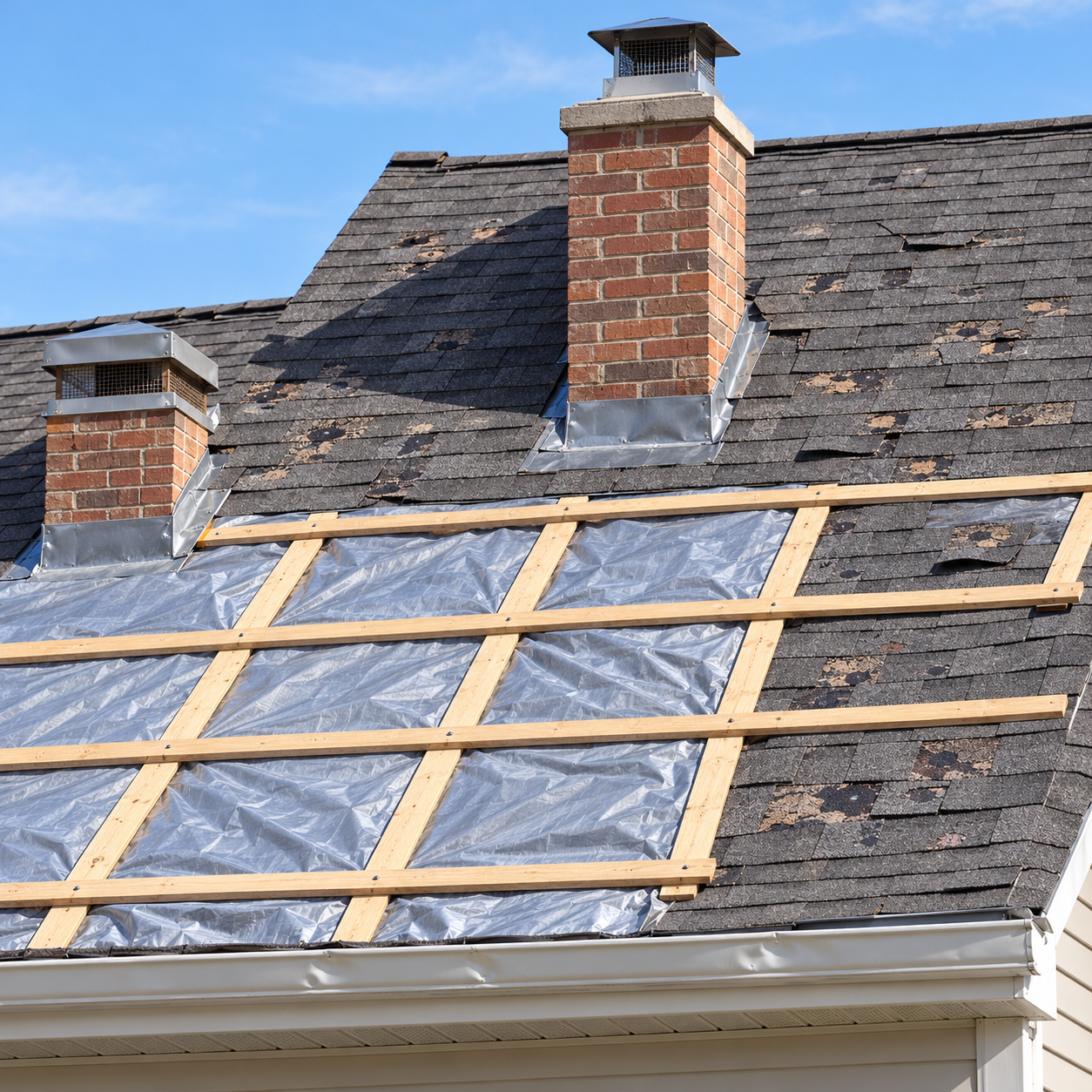
The thunder has stopped rolling, the wind has died down, and the sun is peeking back through the clouds. You might breathe a sigh of relief that your home is still standing, but the danger isn’t necessarily over.
Severe weather—whether it is straight-line winds, hail, or heavy snow—often leaves behind invisible scars on your home’s exterior. If left unchecked, these small injuries can turn into major leaks months later.
You don’t need to be a professional roofer to spot the red flags. Here is a guide on how to perform a preliminary check for wind damage roof issues and hail damage signs before calling in the pros.
1. Start on the Ground (Safety First!)
Do not climb a ladder immediately after a storm. The roof may be slippery, debris could be unstable, and you might not see structural weaknesses.
Start by walking the perimeter of your home.
-
Look for Shingles: Are there pieces of shingles in your yard or bushes? This is the most obvious sign of wind damage roof failure.
-
Check the Fascia: Is the metal trim around the roof edge bent or pulling away?
-
Scan the Ground: Look for heavy debris (branches) that may have hit the roof on their way down.
2. Spotting the Signs of Wind Damage
High winds don’t just tear shingles off; they can break the seal that holds them down. Using binoculars from the ground, look for:
-
Creased Shingles: If a shingle looks like it has a horizontal line across the top, the wind has flipped it up and snapped the fiberglass matting.
-
Lifted Flashing: Check around the chimney and vent pipes. If the metal is pulled up, water has an open door to your insulation.
3. Identifying Hail Damage Signs
Hail is tricky. Unless it is golf-ball sized, it rarely punches a hole through the roof. Instead, it “bruises” the shingles.
-
Granule Loss: Look at your downspouts. If you see a pile of black mineral granules, the hail has knocked the protective coating off your shingles.
-
The “Polka Dot” Pattern: On the roof surface, hail hits look like dark, round spots where the granules are missing. This exposes the asphalt to the sun, leading to rapid aging.
-
Dented Metal: Check your gutters, downspouts, and mailbox. If soft metal is dented, your roof definitely took a beating.
4. The Interior Check
Head into your attic during the daylight hours.
-
Wet Insulation: Feel the insulation; if it is damp, water breached the deck during the storm.
-
Leaking Nails: Look at the nails sticking through the plywood. If they are dripping or have rust rings, moisture is getting in.
5. Why You Need a Professional Storm Roof Inspection
Even if your roof looks fine from the driveway, you might have post-storm roof repair needs that only an expert can see. Small tears in the shingle seal or micro-fractures in the matting can void your manufacturer’s warranty if not documented.
Most insurance companies require a detailed assessment to process a claim. A professional storm roof inspection provides the photos and technical report you need to get coverage.
Conclusion: Don’t Wait for the Next Rain
If you suspect damage, time is of the essence. Most insurance policies have a statute of limitations on filing storm claims.
Schedule a Free Inspection Now and let us give you a clean bill of health (or a plan of action). Need repairs fast? Get a Free Quote Today. If you need to replace the roof, Claim $500 Off Your Project.